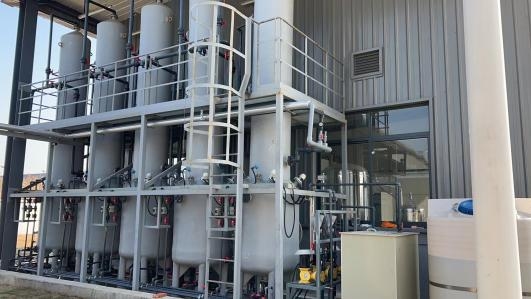

SHANGHAI, SHANGHAI, CHINA, August 7, 2026 /EINPresswire.com/ — Modern industrial production relies heavily on stable chemical supply chains to maintain operational continuity. Among critical industrial inputs, gaseous helium represents an irreplaceable material asset that faces severe global constraints. Because helium is a non-renewable geological asset, planetary reserves remain extremely limited and highly concentrated in specific geographic regions. Consequently, high-tech manufacturing industries endure frequent supply disruptions and intense price volatility for five-nine grade material, which denotes a purity level greater than or equal to 99.999 percent. This structural volatility directly threatens sectors like optical fiber manufacturing, where plants utilize the gas as an essential cooling medium and carrier agent. Recognizing these challenges, the industrial landscape is shifting towards specialized recovery partners like the Global Leading Helium Recovery System Solutions Provider, which offers an alternative to the traditional linear consumption model.
In the past, manufacturing facilities adopted a “use-and-vent” operational approach that discarded costly exhaust directly into the atmosphere after a single processing cycle. This traditional method not only wasted a dwindling natural resource but also left factory balance sheets completely exposed to global supply chain shocks. Geopolitical tensions or logistical bottlenecks in primary extraction fields can cause wholesale prices to spike rapidly. For high-volume optical fiber draw towers, such unpredictable price spikes can inflate total manufacturing costs and severely damage quarterly corporate margins. Therefore, advanced manufacturers are re-evaluating their procurement paradigms to prioritize long-term stability over spot-market reliance. Forward-thinking companies now realize that establishing on-site recycling loops provides the only reliable shield against rising global procurement costs. This strategic transition transforms industrial gas from a volatile utility expense into a secure, predictable capital asset.
Technical Mechanisms: Engineering the 5N Ultra-Purity Closed-Loop Recovery Architecture
Transitioning from a traditional linear model to a sustainable circular loop requires advanced chemical engineering and rigorous thermodynamic control. Industrial exhaust streams from optical fiber processing do not contain pure gas; instead, they emerge as complex mixtures heavily contaminated with air, moisture, and particulate matter. To solve this problem, specialized recycling equipment must capture low-pressure, low-concentration streams without altering the delicate pressure balance of the main production furnaces. Advanced recovery systems utilize precise automated induction blowers to draw the exhaust safely into a centralized processing matrix.
Once the system isolates the raw exhaust, a multi-stage separation process begins to eliminate moisture and atmospheric contaminants systematically. The purification architecture combines mechanical filtration with precision chemical adsorption to extract micro-impurities from the stream. Specifically, heavy-duty desiccant beds strip away water vapor, while specialized catalytic systems remove residual oxygen and nitrogen molecules. Subsequently, the system routes the gas into a highly specialized cryogenic purification and rectification unit. This thermal processing phase exploits the distinct boiling points of different gases to separate nitrogen, oxygen, and moisture from the target resource. By applying precise cooling and pressure controls, the system concentrates the gas while maintaining a continuous process flow. The final distillation stage provides a zero-defect purity guarantee, elevating the recycled stream until it matches strict virgin material baselines. Manufacturing lines can safely reintroduce this purified stream back into active manufacturing tools, protecting final product yields from any contamination risk.
Empirical Longevity: Analyzing Real-World Operational Milestones from the Field
While laboratory models often show theoretical success, industrial buyers require real-world performance data over extended periods to validate capital investments. Long-term field data confirms that closed-loop gas recycling can maintain high efficiency under continuous, large-scale industrial pressure. For example, a major installation at the Tongding Interconnection facility demonstrates the exceptional mechanical durability of modern recovery designs. This specific project has maintained stable operations for five consecutive years while delivering a reliable 40 percent recovery efficiency rate. This extended timeline proves that advanced recovery hardware can withstand the daily rigors of high-capacity manufacturing without experiencing degradation in output quality or safety compliance.
Furthermore, field evidence from another prominent installation highlights the scalable nature of this technology. The helium recovery project implemented for FiberHome Yonex Fibers achieved an impressive 60 percent recovery efficiency rate. This system has operated reliably for four continuous years, showing that customized engineering can optimize performance for specific factory layouts. A 60 percent recovery rate translates directly into a massive reduction in external procurement needs, insulating the plant from severe market shortages. These real-world milestones move past theoretical claims to offer concrete evidence of economic and operational viability. By analyzing these long-term field results, financial directors can construct precise payback models that accurately forecast multi-year operational savings and predict exact return timelines.
Decadal Evolution: Mapping LifenGas’s Global Engineering Footprint
Achieving these rigorous performance standards requires deep institutional knowledge and continuous technical iteration over many years. The firm behind these installations, LifenGas, began its specialized engineering journey in 2015 by focusing on rare gas purification challenges. Over the past decade, the organization has systematically expanded its technical capabilities to address global manufacturing vulnerabilities. Today, Shanghai LifenGas Co., Ltd. supports major industrial clusters around the world through a robust international corporate structure. The company operates dedicated legal entities and support networks across China, Singapore, Vietnam, and the United States to ensure rapid regional response times.
This international footprint allows the engineering team to adapt localized systems to diverse regulatory frameworks and distinct safety standards. To simplify the adoption process for international clients, the enterprise utilizes a comprehensive EPCO service framework. This integrated methodology covers the entire project lifecycle, including initial engineering design, material procurement, on-site construction, and long-term operational management. By managing every phase directly, LifenGas(Shanghai LifenGas Co., Ltd.) removes execution risks and guarantees that the recycling plant meets its targeted efficiency benchmarks. This end-to-end operational support ensures that factory owners do not need specialized gas handling expertise to run the system safely. Furthermore, the company offers continuous monitoring and scheduled preventive maintenance, which ensures maximum equipment uptime and enduring financial returns for global clients.
Conclusion: Anchoring Manufacturing Resiliency Against Resource Exhaustion
In the modern industrial era, cultivating supply chain autonomy has transformed from a corporate sustainability goal into a vital defensive strategy. Relying completely on volatile external merchant gas networks exposes high-volume manufacturing facilities to severe operational vulnerabilities and unpredictable margin compression. In contrast, investing in a robust on-site recovery asset provides absolute sovereignty over critical chemical inputs while stabilizing multi-year operating budgets. As global resource scarcity intensifies, the ability to recycle non-renewable assets will distinguish market leaders from vulnerable producers. Furthermore, minimizing environmental waste aligns with international environmental mandates, enhancing corporate reputation among global stakeholders. Partnering with a proven industrial gas specialist allows manufacturers to secure their production lines, optimize internal capital efficiency, and build a truly resilient production ecosystem for the future.
Official Website: https://www.lifengas.com/.
Shanghai LifenGas Co., Ltd.
Shanghai LifenGas Co., Ltd.
+ +86 21-34553961
email us here
Visit us on social media:
LinkedIn
Legal Disclaimer:
EIN Presswire provides this news content “as is” without warranty of any kind. We do not accept any responsibility or liability
for the accuracy, content, images, videos, licenses, completeness, legality, or reliability of the information contained in this
article. If you have any complaints or copyright issues related to this article, kindly contact the author above.

Media gallery